
Blank KARNAUGH MAP
     C      B      A       OUTPUT
     0      0      0         0
     0      0      1         0
     0      1      0         0
     0      1      1         1
     1      0      0         0
     1      0      1         1
     1      1      0         1
     1      1      1         1
We could look at the table and make a few guesses as to the function OR we could use a
method!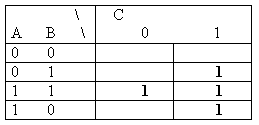
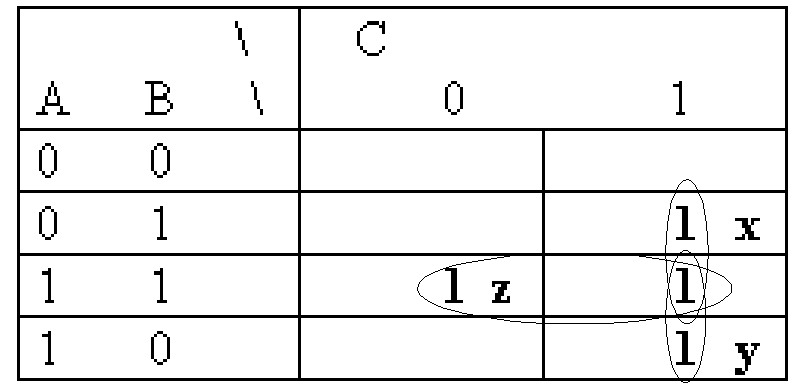
C   B   A   OUTPUT  A.B   A.C   B.C   FUNCTION
                    "x"   "y"   "z"    "x+y+z"
0   0   0     0      0     0     0        0
0   0   1     0      0     0     0        0
0   1   0     0      0     0     0        0
0   1   1     1      1     0     0        1
1   0   0     0      0     0     0        0
1   0   1     1      0     1     0        1
1   1   0     1      0     0     1        1
1   1   1     1      1     1     1        1
The OUTPUT column is the same as FUNCTION x+y+z, which is A.B + A.C + B.C, so the circuit will
simplify to THREE 2 INPUT AND gates and ONE 3 INPUT OR gate to combine them.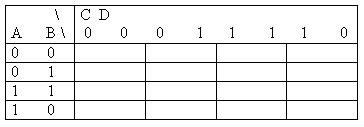
     D   C   B   A   OUTPUT
     0   0   0   0     0
     0   0   0   1     0
     0   0   1   0     0
     0   0   1   1     0
     0   1   0   0     0
     0   1   0   1     0
     0   1   1   0     0
     0   1   1   1     1
     1   0   0   0     0
     1   0   0   1     0
     1   0   1   0     0
     1   0   1   1     1
     1   1   0   0     0
     1   1   0   1     1
     1   1   1   0     1
     1   1   1   1     1
Now "plot" all the 1's on the MAP and group as before.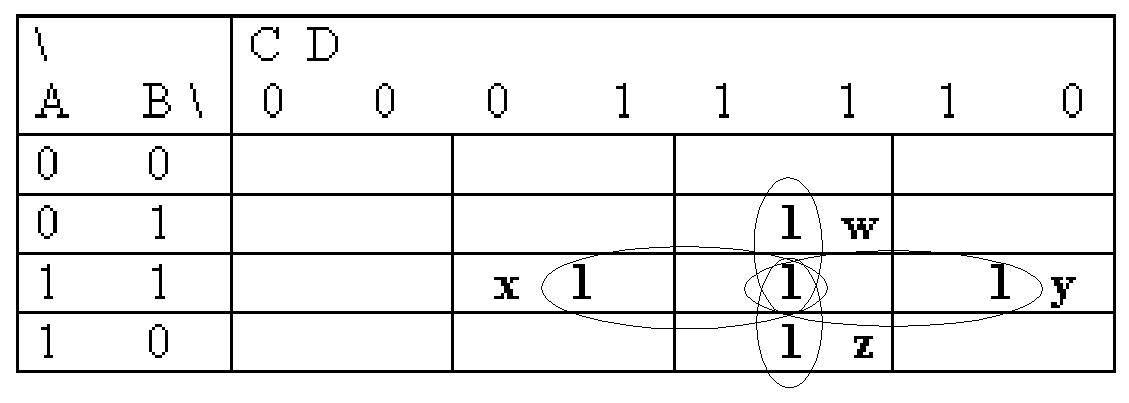
D   C   B   A  O/P "w" "x" "y" "z" FUNC
0   0   0   0   0   0   0   0   0   0
0   0   0   1   0   0   0   0   0   0
0   0   1   0   0   0   0   0   0   0
0   0   1   1   0   0   0   0   0   0
0   1   0   0   0   0   0   0   0   0
0   1   0   1   0   0   0   0   0   0
0   1   1   0   0   0   0   0   0   0
0   1   1   1   1   0   0   1   0   1
1   0   0   0   0   0   0   0   0   0
1   0   0   1   0   0   0   0   0   0
1   0   1   0   0   0   0   0   0   0
1   0   1   1   1   0   1   0   0   1
1   1   0   0   0   0   0   0   0   0
1   1   0   1   1   0   0   0   1   1
1   1   1   0   1   1   0   0   0   1
1   1   1   1   1   1   1   1   1   1
Again the FUNCTION is equal to the output of the four variable problem, so the circuit can
be built from FOUR 3 INPUT AND gates combined by ONE 4 INPUT OR gate. These two examples
show how KARNAUGH MAPs are used, and how they apply to real digital electronic problems.